In today’s fast-paced world, where efficiency and sustainability go hand in hand, laundry detergent sheets have emerged as a game-changer. Their minimalist design eliminates the need for bulky plastic bottles and messy liquid measuring. But one common question among first-time buyers and private label brands alike is: What is the ideal size and thickness of laundry detergent sheets to ensure both cleaning performance and convenience? This article breaks it down in simple, clear terms—making it easy for consumers and entrepreneurs to understand the perfect formulation.
Why Size and Thickness Matter
The effectiveness of laundry detergent sheets isn’t just about ingredients—it’s also about how they’re delivered. The size and thickness affect:
-
Dissolvability in different temperatures
-
Cleaning power per load
-
Storage and packaging
-
User convenience
-
Cost-effectiveness for manufacturers and consumers
Finding the right balance ensures the sheet is powerful enough to clean, yet small and thin enough to dissolve fully and fit packaging requirements.
Standard Size: What Works Best?
Most popular laundry detergent sheets on the market follow these standard dimensions:
-
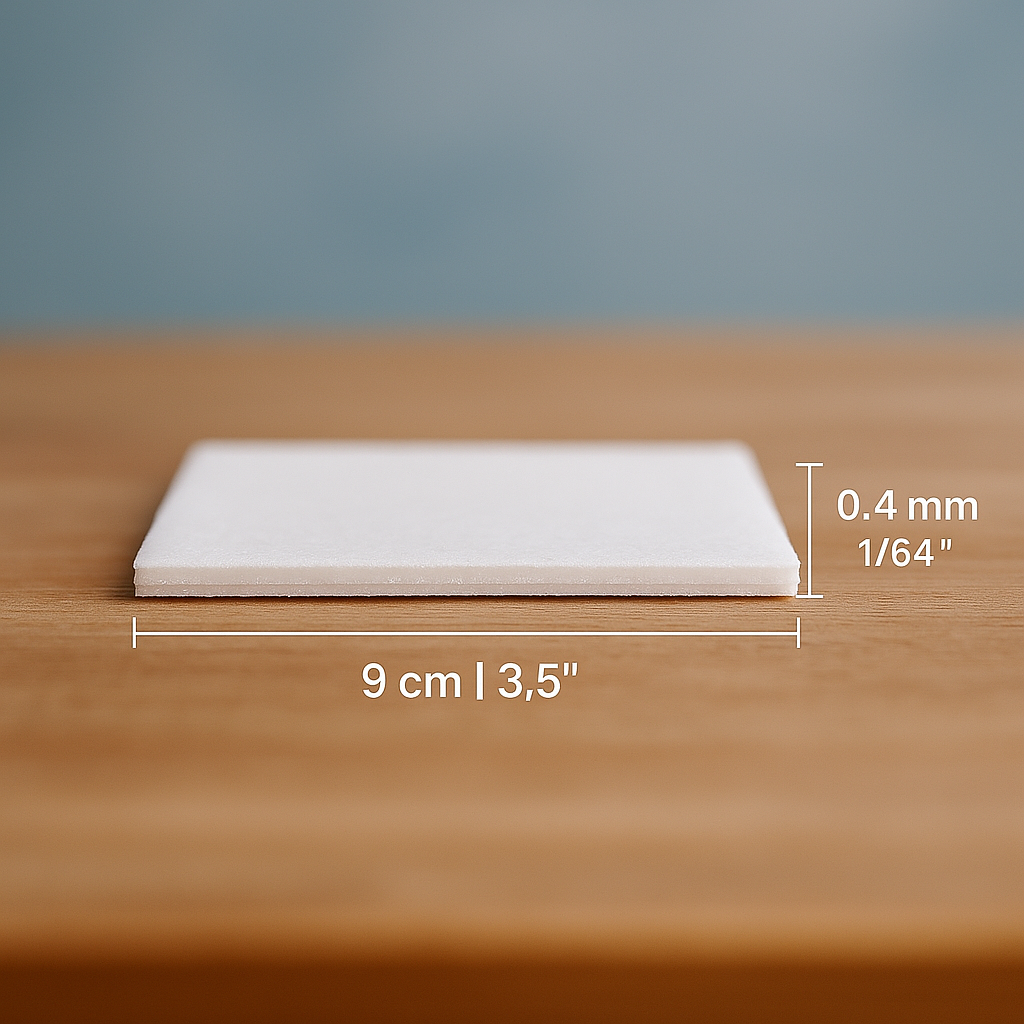
Size: Approximately 9cm x 11cm (3.5 x 4.3 inches)
-
Reason: This dimension is ideal for folding or stacking within retail-friendly packaging. It fits easily into most washing machines, including compact and top-loading types.
Some brands may cut these into smaller portions (e.g., half-sheets) for adjustable dosing, especially for light loads or handwashing. That’s a flexibility customers appreciate.
Thickness: Not Too Thin, Not Too Thick
Thickness plays a role in both user experience and performance:
-
Standard thickness: 0.3mm to 0.6mm
-
Sheets thinner than 0.3mm may be too flimsy, tear easily, or lack enough cleaning agent.
-
Sheets thicker than 0.6mm may take too long to dissolve, especially in cold water or short wash cycles.
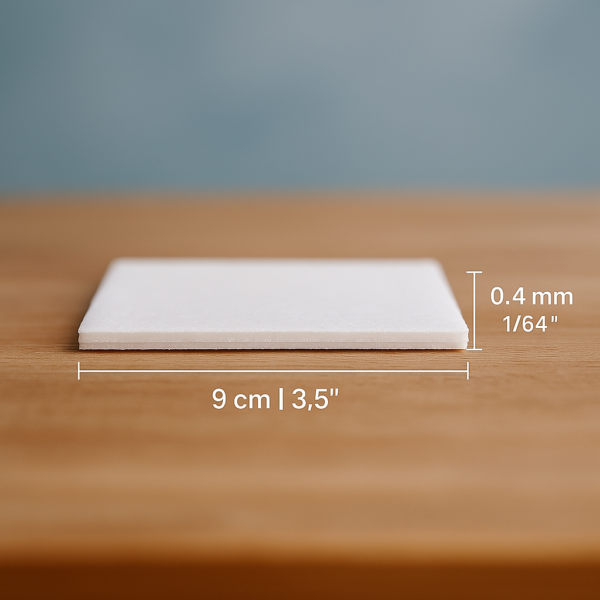
The ideal thickness tends to hover around 0.4mm, which offers a balance of strength, ease of use, and dissolvability.
Customizing Size and Thickness for Use Cases
Depending on your target market or personal use, here’s how size and thickness might vary:
| Use Case | Suggested Size | Suggested Thickness |
|---|---|---|
| Everyday Household Use | 9cm x 11cm | 0.4mm |
| Travel Packs | 6cm x 8cm (mini size) | 0.3–0.35mm |
| Heavy-Duty Laundry | 10cm x 12cm | 0.5–0.6mm |
| Baby/Delicate Clothes | 8cm x 10cm | 0.3–0.4mm (mild formula) |
This flexibility allows for product line expansion—a key advantage for OEM/ODM brands looking to differentiate.
The Importance of Uniformity
Whether you’re a manufacturer or private label reseller, uniform sizing is essential. Why?
-
Consistent performance: Consumers expect each sheet to work the same.
-
Efficient packaging: Identical sheets simplify packing, shipping, and storage.
-
Brand reliability: Predictable results = trust.
Pro tip: Laser or die-cutting methods ensure precision and reduce wastage during production.
Material Composition and Thickness
Remember: thickness is not just about how much detergent is embedded. It’s also influenced by the carrier material—usually a biodegradable, water-soluble polymer like PVA (polyvinyl alcohol).
Higher-quality PVA films offer durability without excess thickness, keeping the sheet strong yet easily dissolvable.
Dissolvability in Cold vs. Warm Water
A common concern among users is whether thicker sheets dissolve in cold water. Here’s what to know:
-
Sheets thicker than 0.5mm may need agitation or warm water to dissolve fully.
-
Premium formulations with fast-dissolve polymers can handle even cold washes (15–20°C).
-
For cold water users, a sheet that is 0.3–0.4mm thick is typically best.
If you’re targeting eco-conscious households that wash in cold water to save energy, highlight your sheet’s dissolvability as a key feature.
Sheet Size and Dosing Clarity
Larger sheets aren’t always better. Consumers care more about clarity in dosing:
-
Should I use one sheet per load, or half a sheet?
-
Will the sheet work for large, small, and medium loads?
Make this crystal clear on your packaging. Even better: offer perforated sheets so users can tear off what they need.
What Influences Customer Preference?
In customer feedback, the preferred traits are:
-
Ease of tearing or removing from box
-
Quick dissolving, especially in cold water
-
Strong enough to handle dirt and odors
-
Fits easily into machine drawers or drum
Hence, staying close to the 9x11cm, 0.4mm standard is usually the safest and most accepted formulation.
Final Recommendations
If you’re launching your own laundry detergent sheet brand or looking to source from an OEM factory, we recommend the following specs as a starting point:
-
Size: 9cm x 11cm
-
Thickness: 0.4mm
-
Material: PVA-based water-soluble polymer
-
Dosing: 1 sheet = 1 standard load
Include clear usage instructions and emphasize cold water performance to win over modern, eco-conscious consumers.
Conclusion
The ideal laundry detergent sheet is a perfect marriage of size, thickness, and performance. Too small or too thin, and it won’t deliver results. Too large or too thick, and it becomes inconvenient and less effective. By aligning your formulation with user habits and washing machine capabilities, you ensure a product that’s not just clean—but cleverly crafted for the modern household.