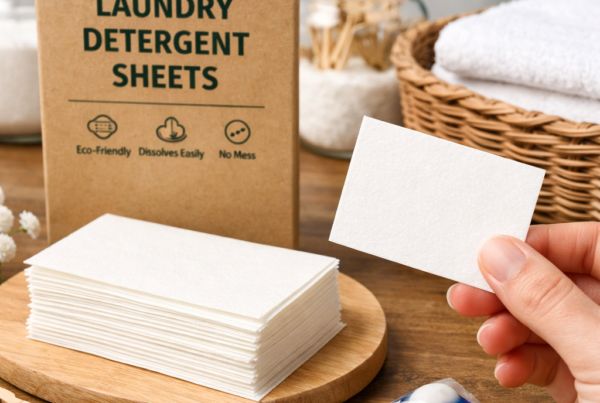
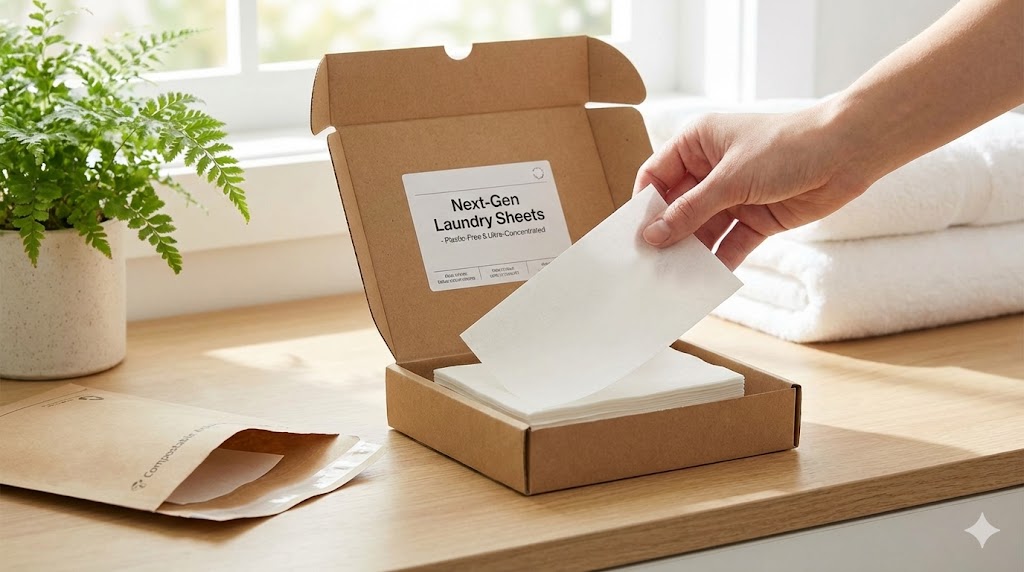
The global cleaning market is currently undergoing a structural rewiring. In this landscape, laundry detergent sheet trends are not just a passing fad but a permanent shift in how households approach fabric care.
For B2B brands and wholesalers, understanding these five market forces is essential to capture the premium growth upside in 2026. 🚀
1. Stringent Environmental Regulations 📜
Environmental laws act as a primary driver for the adoption of anhydrous (water-free) cleaning formats. Specifically, regions like New York City and California are introducing bills that restrict or ban single-use plastic packaging and certain water-soluble polymers by 2026.
Furthermore, European REACH standards continue to tighten restrictions on microplastics. These regulations force manufacturers to innovate beyond traditional heavy plastic jugs. Ultimately, these legal frameworks position biodegradable detergent sheets as the safest strategic choice for compliant brands. ♻️
2. The Dominance of E-commerce and Subscriptions 💻
Online retail is currently the fastest-growing distribution channel for the laundry sector. Because laundry sheets are remarkably thin and lightweight, they perfectly suit the Direct-to-Consumer (DTC) model.
In fact, e-commerce platforms enable emerging brands to reach global audiences without competing for limited physical retail shelf space. In addition, many brands now leverage subscription-based delivery services, which build strong customer loyalty and steady revenue streams. 🛒
laundry detergent sheet trends
3. Urbanization and the Lightweighting Trend 🏙️
Modern lifestyles favor products that save both time and space. As urbanization increases globally, especially in the Asia-Pacific region, consumers living in compact apartments demand space-efficient solutions.
Detergent sheets reduce storage space requirements by an average of 59% compared to bulky bottles. Consequently, this lightweight nature also lowers transportation costs and carbon emissions during shipping, appealing to both businesses and eco-conscious residents. 📦
4. Shifting Consumer Preferences for “Green” Purity 🌿
Today’s consumers do not just want a clean house; they want a clean conscience. Research shows that over 53% of global consumers actively prefer plastic-free household products.
Laundry detergent sheets eliminate up to 94% of the plastic packaging used in traditional formats. Moreover, shoppers now prioritize “clean” ingredient lists that are free from phosphates, parabens, and synthetic fragrances. This preference for natural, non-toxic formulations is driving the “biodegradable” segment to reach significant market values by 2030. ✨
5. Rapid Product Innovation and Customization 🧪
Innovation in formulation is closing the performance gap between traditional detergents and sheets. Specifically, the market is seeing a 33% increase in the use of enzyme-enhanced detergent sheets for deeper stain removal at lower temperatures.
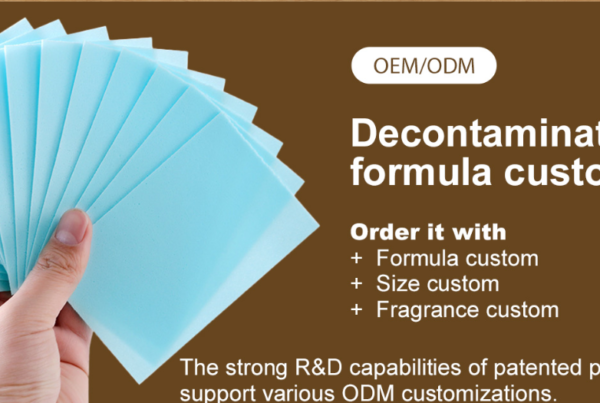
Furthermore, manufacturers now offer massive OEM and private label opportunities. Brands can customize their offerings with:
-
Specialized Scents: Such as fresh lavender or unscented “Free & Clear” options for sensitive skin.
-
High-Efficiency (HE) Compatibility: Ensuring sheets dissolve instantly in all water temperatures.
-
Tailored Strength: Formulating gentler versions for baby clothes or stronger versions for athletic wear.
Conclusion 🏁
To summarize, a combination of legal pressure, digital growth, and a genuine passion for sustainability is pushing laundry detergent sheet trends into the mainstream. For companies aiming for market leadership in 2026, aligning with these five forces is the smartest path forward. 🌟