
How Surfactants Work in Laundry Detergent Sheets: The Science Behind Powerful Cleaning
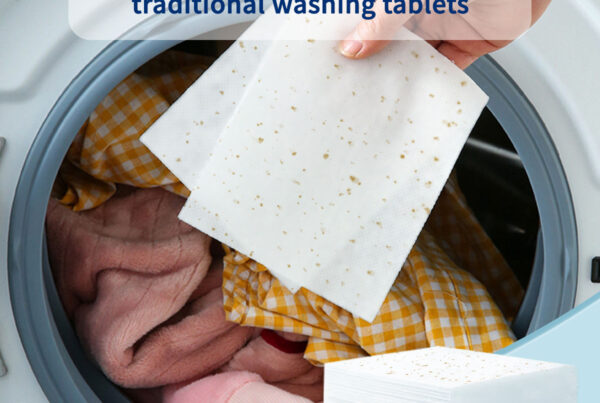
In recent years, laundry detergent sheets have gained global popularity as a compact, eco-friendly alternative to traditional liquid and powder detergents. Many consumers are surprised by one question:
How can such a small, lightweight sheet clean clothes so effectively?
The answer lies in surfactants — the core cleaning agents that drive the washing performance of detergent sheets. In this article, we’ll break down the surfactant mechanism, explain how oil and dirt are removed at a molecular level, and reveal the washing science behind detergent sheets — all in a clear, non-technical way.
What Are Surfactants?
Surfactants (short for surface-active agents) are specialized molecules designed to interact with both water and oil, two substances that normally repel each other.
Each surfactant molecule has a unique dual structure:
-
Hydrophilic head – attracted to water
-
Hydrophobic tail – attracted to oil and grease
This dual affinity is the foundation of all modern cleaning science.
In laundry detergent sheets, surfactants are highly concentrated and precisely dosed, allowing a single sheet to deliver powerful cleaning performance with minimal material.
Why Water Alone Cannot Remove Oil Stains
Oil-based stains such as sebum, cooking grease, cosmetics, and industrial oils are hydrophobic, meaning they do not dissolve in water.
When clothes are washed with water alone:
-
Oil adheres strongly to fabric fibers
-
Mechanical agitation is not enough to detach greasy stains
-
Dirt remains embedded in textiles
This is why surfactants are essential — they act as molecular bridges between oil and water.
The Molecular Mechanism: How Surfactants Remove Oil
1. Penetration into Fabric Fibers
When a detergent sheet dissolves in water, surfactants are released evenly into the wash. These molecules quickly penetrate deep into fabric fibers where oil and dirt are trapped.
The hydrophobic tails seek out and attach to oil molecules on the fabric surface.
2. Emulsification of Oil Stains
Once attached, surfactants surround oil droplets, forming structures known as micelles.
-
Oil is trapped in the center
-
Hydrophilic heads face outward toward water
This process is called emulsification, where large oil deposits are broken down into tiny, water-compatible droplets.
As a result:
-
Oil no longer clings to fabric
-
Grease becomes suspended in the wash water
3. Dispersion and Anti-Redeposition
Surfactants don’t just remove dirt — they keep it from going back onto clothes.
Once oil and soil particles are emulsified:
-
They remain dispersed in water
-
Electrostatic forces prevent redeposition
-
Rinse water carries contaminants away
This ensures cleaner fabrics and prevents dullness caused by soil reattachment.
Why Laundry Detergent Sheets Are So Effective
Despite their thin appearance, detergent sheets are engineered for maximum surfactant efficiency.
Concentrated Surfactant System
Unlike liquid detergents that contain up to 60–70% water, detergent sheets are:
-
Water-free or low-moisture
-
Highly concentrated
-
Precisely formulated
This allows more active surfactant per gram, delivering strong cleaning power in a compact form.
Rapid Dissolution Technology
High-quality laundry sheets use fast-dissolving carrier films, allowing surfactants to:
-
Disperse evenly in cold or warm water
-
Activate immediately upon contact
-
Avoid residue on fabrics
This ensures consistent performance across different washing conditions.
Types of Surfactants Used in Laundry Sheets
To balance cleaning power, fabric care, and skin safety, most detergent sheets use a blended surfactant system:
1. Anionic Surfactants
-
Excellent oil and soil removal
-
Strong cleaning performance
-
Commonly derived from plant-based fatty alcohols
2. Non-Ionic Surfactants
-
Effective in cold water
-
Low irritation potential
-
Improve performance on synthetic fabrics
3. Amphoteric Surfactants (Optional)
-
Enhance mildness
-
Improve foam stability
-
Suitable for sensitive skin formulas
By optimizing surfactant ratios, manufacturers ensure high efficiency with low irritation and low residue.
Surfactants and Fabric Safety
Modern detergent sheets are designed to clean without damaging textiles.
Advanced surfactant systems:
-
Reduce fiber friction
-
Minimize color fading
-
Maintain fabric softness
Compared to harsh traditional powders, detergent sheets are gentler on:
-
Delicate fabrics
-
Activewear
-
Baby clothing
Environmental Advantages of Surfactant-Based Sheets
Surfactants used in premium laundry sheets are increasingly:
-
Biodegradable
-
Plant-derived
-
Low aquatic toxicity
Because detergent sheets require:
-
Less packaging
-
No plastic bottles
-
Lower transportation emissions
They represent a more sustainable cleaning solution without compromising performance.
“Why Such a Small Sheet Cleans So Well”
The effectiveness of laundry detergent sheets comes down to smart chemistry, not volume.
✔ Concentrated surfactants
✔ Efficient molecular action
✔ Precise dosage
✔ Optimized dissolution
Instead of excess fillers and water, detergent sheets deliver only what fabrics need to get clean.
Conclusion: The Science Behind the Simplicity
Laundry detergent sheets may look simple, but behind each sheet is advanced washing science driven by surfactant chemistry.
By understanding how surfactants emulsify oil, disperse dirt, and protect fabrics, consumers gain confidence in choosing detergent sheets as a modern, effective, and eco-friendly solution.
Small sheet — big cleaning power.