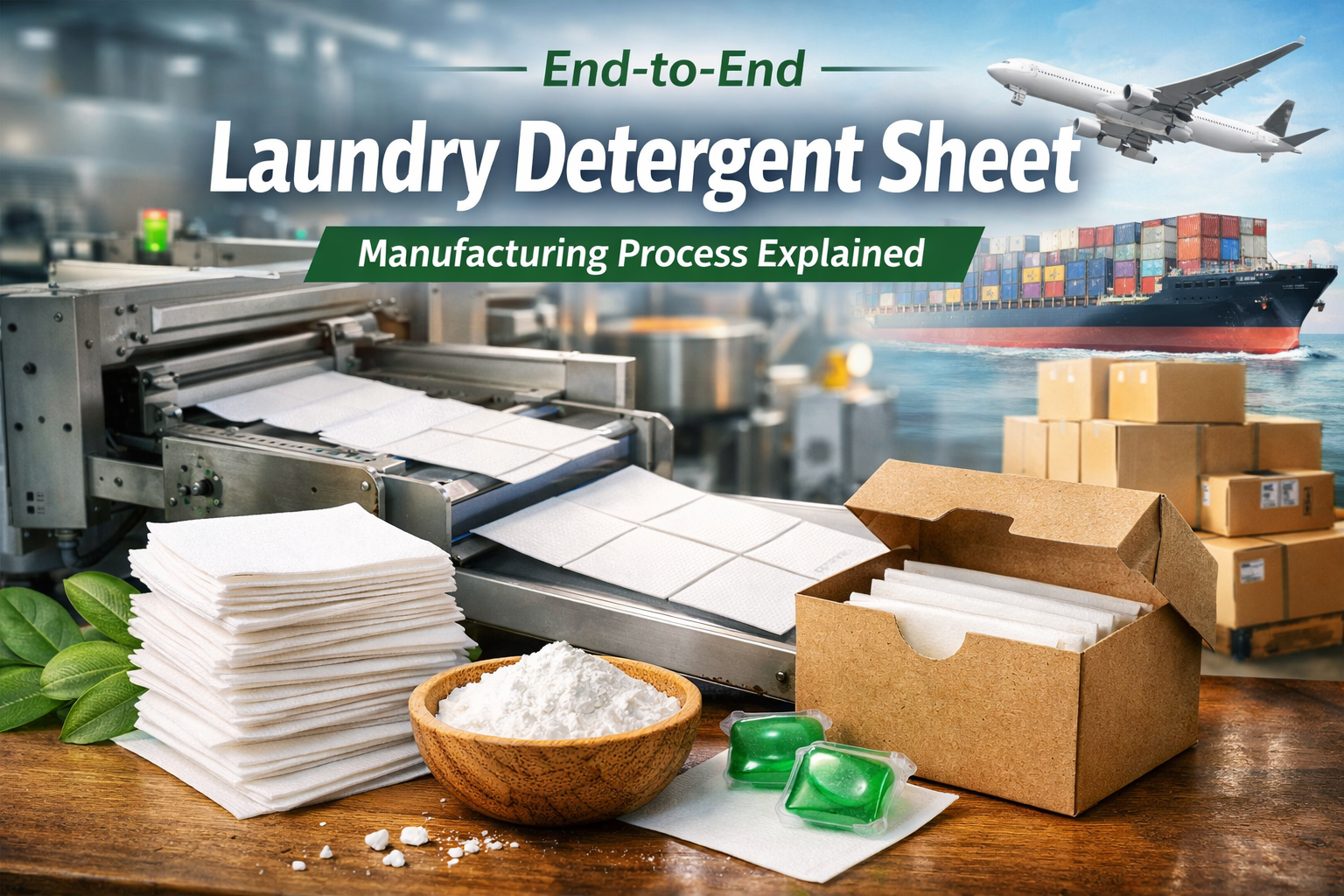
End-to-End Laundry Detergent Sheet Manufacturing Process Explained
As global consumers shift toward eco-friendly and space-saving laundry solutions, laundry detergent sheets have quickly become one of the most popular alternatives to traditional liquid and powder detergents. Lightweight, biodegradable, and convenient, these sheets are now widely used by households, travelers, and environmentally conscious brands.
For companies looking to enter the market, understanding the laundry detergent sheet manufacturing process is essential. In this article, we will walk through the end-to-end manufacturing process of laundry detergent sheets, from raw material sourcing to packaging and global logistics.
1. Raw Material Selection for Laundry Detergent Sheets
The first step in laundry detergent sheet manufacturing is selecting the right raw materials. High-quality ingredients determine both the cleaning efficiency and environmental performance of the final product.
Typical ingredients include:
-
Surfactants – Remove dirt and oils from fabrics
-
Enzymes – Break down protein stains such as sweat or food
-
Water-soluble film (usually PVA) – The carrier material that dissolves in water
-
Fragrance oils – Provide a pleasant scent
-
Stabilizers and softeners – Improve fabric feel and shelf life
For eco-friendly brands, manufacturers often use:
-
Plant-based surfactants
-
Phosphate-free formulations
-
Biodegradable ingredients
Many OEM factories also develop custom formulas to meet market needs such as sensitive skin, baby-safe, fragrance-free, or high-efficiency washing machines.
2. Formula Development and Testing
Before mass production begins, professional detergent manufacturers conduct formula testing and performance verification.
This stage includes:
-
Stain removal testing
-
Dissolution speed testing
-
Cold water solubility testing
-
Skin safety testing
-
Machine compatibility testing
For brands targeting international markets, the product may also need to comply with standards such as:
-
EU REACH regulations
-
US EPA Safer Choice guidelines
-
Dermatological safety tests
A reliable manufacturer ensures the formula meets both performance expectations and environmental regulations.
3. Sheet Production Process
Once the formula is finalized, the next step is the industrial production of detergent sheets.
The typical process includes:
Mixing and Liquid Preparation
All ingredients are precisely measured and mixed in a high-speed reactor tank to create a homogeneous detergent solution.
Coating on Water-Soluble Film
The liquid detergent is evenly coated onto a water-soluble PVA film using automated coating machines. Consistent coating thickness is critical for accurate dosage and performance.
Drying and Solidification
After coating, the sheets pass through controlled drying tunnels where moisture evaporates and the detergent layer solidifies.
Precision Cutting
Large detergent sheet rolls are then cut into standard-sized sheets, typically designed for one wash load per sheet.
Advanced factories use fully automated production lines to ensure consistent quality and high production capacity.
4. Quality Control and Inspection
Quality control is a critical step in the laundry detergent sheet manufacturing process.
Key inspection procedures include:
-
Weight consistency testing
-
Dissolution speed testing
-
Cleaning performance testing
-
Moisture level inspection
-
Microbial contamination testing
Factories often follow ISO quality management systems to ensure every batch meets international quality standards.
For private label clients, manufacturers can also provide:
-
COA (Certificate of Analysis)
-
MSDS (Material Safety Data Sheet)
-
Product testing reports
5. Packaging Solutions for Laundry Detergent Sheets
Packaging plays an important role in protecting the product and building a strong brand identity.
Common packaging options include:
1. Paper box packaging
Eco-friendly and popular for sustainable brands.
2. Resealable zip bags
Convenient and moisture-resistant.
3. Compact travel packaging
Ideal for travel-size laundry sheets.
Private label manufacturers typically provide custom packaging design services, including:
-
Brand logo printing
-
Multilingual labeling
-
Sustainable packaging materials
-
Retail-ready box design
Good packaging also improves product shelf life and logistics efficiency.
6. Global Logistics and Export Process
After production and packaging are completed, the final stage is global logistics and export management.
Professional OEM manufacturers usually support:
-
Bulk sea freight shipping
-
Air freight for urgent orders
-
Amazon FBA preparation
-
Drop shipping for e-commerce brands
Proper export documentation includes:
-
Commercial Invoice
-
Packing List
-
MSDS documents
-
Customs clearance paperwork
Efficient logistics ensures that detergent sheet brands can launch their products in international markets quickly and smoothly.
Why Laundry Detergent Sheets Are the Future of Cleaning
Laundry detergent sheets offer several advantages over traditional detergents:
✔ Plastic-free packaging
✔ Lightweight and travel-friendly
✔ No measuring required
✔ Lower carbon footprint
✔ Easy storage and transportation
As sustainability becomes a major purchasing factor, more brands are choosing private label laundry detergent sheets as their next product line.
Final Thoughts
Understanding the end-to-end laundry detergent sheet manufacturing process helps brands select the right OEM partner and ensure consistent product quality.
From raw material sourcing and formula development to production, packaging, and global logistics, every stage plays a crucial role in delivering high-performance, eco-friendly detergent sheets to consumers worldwide.
For brands looking to enter the fast-growing eco-cleaning market, working with an experienced manufacturer can significantly reduce development time and accelerate market success.